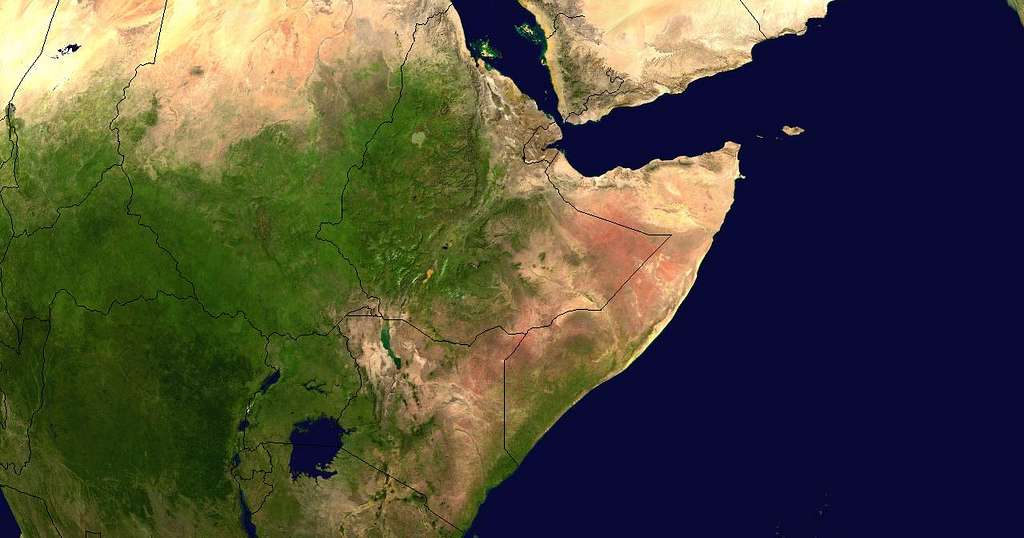
Transnational State Repressions, Abductions, and Refoulements in the Horn of Africa
Domestic repression and human rights abuses are well documented across the Horn of Africa, yet cross-border repression remains underexamined despite growing evidence of systematic transnational operations—including abductions, enforced disappearances, and refoulements—that violate international law. This article highlights how such extraterritorial practices extend authoritarian control into regional and diaspora spaces. States including Ethiopia, Kenya, Uganda, Djibouti, Somalia, and Yemen have engaged in measures that erode asylum protections, undermine due process, and normalize coercion under counterterrorism frameworks, revealing how regional security networks diffuse authoritarian violence.
This analysis draws on firsthand experience as an Ethiopian public official (2018–2020), academic research, historical records, human rights reports, investigative documents, and interviews with survivors. Combining insider insight with documentary and testimonial evidence, it shows that transnational repression in the Horn of Africa is structured, institutionalized, and warrants greater international attention.
Insider Perspective on Transnational Repressive Policy Formulation
In April 2018, a broad-based protest movement helped Abiy Ahmed to become prime minister of Ethiopia, ending the country’s long-standing rule. As a participant in that movement and later an official in the Oromia Regional State, I witnessed the failed transition firsthand. By May 2020, I resigned—a decision that exposed me to significant risk and ultimately forced me and many citizens into exile, as the administration shifted toward centralization and state violence, linking this article to broader Refugee research themes. My tenure offered a rare view into how transnational repression is formulated. In a 2018 closed-door meeting at the Prime Minister’s Office, members of the Oromia ruling party Central Committee, including myself, received a high-level intelligence briefing led by the prime minister. The presentation framed “extreme nationalism” and “terrorism” as imminent threats, implicating opposition groups in the June 2018 Meskel Square grenade attack.
Citing “intercepted communications” from Kenya to North America, officials cast diaspora activists and refugees as security threats. The prime minister then ordered expanded domestic and cross-border surveillance and extradition efforts, effectively reframing dissent abroad as a national security threat requiring coordinated action. I, alongside my colleague Taye Dendea—former State Minister of Peace and now a political prisoner—challenged this approach. We warned that conflating dissent with terrorism would undermine democratic reform and violate international norms. Our objections were dismissed, signaling that securitization of opposition politics was becoming institutional doctrine rather than a temporary response.
The United States later deployed the Federal Bureau of Investigation to investigate the grenade attack, but its findings were never made public. This opacity reinforced official narratives while shielding intelligence claims from scrutiny, enabling expanded surveillance and cross-border operations with minimal oversight. This episode underscores a broader pattern: transnational repression is not ad hoc but debated, authorized, and embedded within formal political structures that extend state power beyond borders.
Patterns of Abduction and Refoulement
Documented cases across the Horn of Africa show that transnational repression is frequently driven by ethnic and political considerations. As discussed below, Amhara, Ogaden, Oromo, Tigrayan, and other activists have all been targeted by Ethiopian security services at different moments. This pattern cuts across administrations because of the continuation of political movements by each community both domestically and in the diaspora.
According to the U.S. State Department’s 2024 Human Rights report, Ethiopian social media activist Suleiman Abdullah was forcibly returned from Saudi Arabia to Ethiopia in December 2024. The 2023 report similarly documents the detention of journalist and Amhara activist Gobeze Sisay in Djibouti, where he was held as a terrorism suspect before being transferred to Ethiopia. These cases illustrate how counterterrorism designations are used to legitimize cross-border arrests that bypass transparent judicial processes.
Earlier incidents reinforce this trend. In 2021, journalist and Tigrayan activist Samson Teklemichael, a critic of Prime Minister Abiy Ahmed, was abducted in Kenya during the Tigray war and remains missing. In 2017, Somalia authorities arrested Abdikarin Sheikh Muse, a senior leader of the Ogaden National Liberation Front (ONLF), and extradited him to Ethiopia; Somalia parliamentary commission later ruled the act unlawful. In 2015, Oromo activist Dabassa Guyo was abducted in Kenya after fleeing persecution and subsequently disappeared.
In 2014, opposition leader Andargachew Tsige was seized while transiting through Sana’a airport in Yemen and rendered to Ethiopia, drawing criticism from Amnesty International and the UN Working Group on Arbitrary Detention. In 2007, Tesfahun Chemeda, a UNHCR-recognized refugee, was arrested in Kenya alongside Mesfin Abebe and forcibly returned; he was later found dead in custody. These cases point to clear violations of the principle of non-refoulement, a cornerstone of international refugee law.
The pattern extends beyond Ethiopia. In October 2025, Kenyan activists Bob Njagi and Nicholas Oyoo were abducted in Uganda and reportedly held incommunicado for weeks. Similarly, a Ugandan opposition figure was abducted in Kenya and later appeared before a military court in Kampala, underscoring the regional scope of such practices.
These cases reveal more than isolated incidents of misconduct. They point to common practices of extraterritorial repression. Security agencies operate through informal networks, bilateral arrangements, and intelligence-sharing mechanisms that blur the line between lawful extradition and clandestine rendition. Transnational repression in the Horn of Africa thus functions more as a shared regional security norm—one that prioritizes regime survival over due process, undermines asylum protections, and weakens the integrity of international human rights law.
Survivor Testimonies
Beyond official reports and diplomatic records, survivor testimonies offer critical insight into how transnational repression operates in practice. I conducted in-depth interviews with four survivors of Ethiopia’s cross-border security operations—two in Kenya and two in Uganda. All described consistent patterns of surveillance, intimidation, and covert activity allegedly linked to Ethiopian intelligence networks targeting activists abroad. Their accounts point to clandestine methods, including the use of proxy actors, unidentified assailants, and informal detention arrangements designed to obscure state responsibility.
An Ethiopian survivor who fled to Kenya reported that he was attacked in January 2025 by two unidentified motorcyclists who stabbed him in the head. A Kenyan police report he shared states that the assailants spoke Ethiopian languages and warned him that his days were numbered. He further reported a second attack in February 2026, when masked assailants allegedly attempted to shoot him.
These repeated incidents highlight a troubling reality: even in Kenya—often viewed as having a relatively open civil society—refugees and dissidents remain vulnerable to cross-border targeting. An engineer by training, Daniel fled Ethiopia after receiving death threats tied to his activism. His experience illustrates a broader pattern in which exile does not ensure safety. Instead, surveillance and coercion appear to follow activists across borders, reinforcing the argument that transnational repression is systematic rather than sporadic—designed to instill fear, deter dissent, and signal that geographic distance offers limited protection from state power.
Legal Frameworks and Security Cooperation
Formally, extradition and cross-border law enforcement in the region are grounded in bilateral treaties and mutual legal assistance agreements. Ethiopia has signed cooperation agreements with several countries in the Horn of Africa and the Middle East. In 2019, for example, Ethiopia and Uganda concluded a mutual agreement on “criminal matters” in Kampala, later ratified by both sides.
Security cooperation has deepened alongside these legal frameworks. In March 2025, senior military and intelligence officials from both countries held high-level talks to expand joint intelligence operations. During these discussions, a deputy director general of Ethiopia’s National Intelligence and Security Service stated that the agency had developed the capacity to “hunt down” threats domestically and transnationally, signaling an institutional commitment to extraterritorial security operations.
However, the existence of treaties does not ensure lawful practice. Numerous documented cases of cross-border abductions, renditions, and forced returns have bypassed judicial review, ignored evidentiary standards, and denied detainees access to counsel or asylum procedures. Such actions often violate the principle of non-refoulement, a core obligation under international refugee and human rights law that prohibits returning individuals to places where they face persecution, torture, or serious harm.
Conclusion
Transnational repression in the Horn of Africa reflects a broader transformation of authoritarian governance. Security institutions increasingly operate through cross-border intelligence networks that erode asylum protections and weaken international legal norms. What begins as domestic repression evolves into regionalized authoritarian cooperation. Addressing this phenomenon requires more than documenting individual cases. It demands: greater transparency in bilateral security agreements; stronger judicial oversight of extradition processes; enhanced protection mechanisms for refugees and political exiles; and coordinated international accountability efforts. Without sustained scrutiny, extraterritorial abductions and refoulements risk becoming normalized instruments of statecraft and security architectures in the region—undermining both human rights and the integrity of the international legal order.


About Author/s