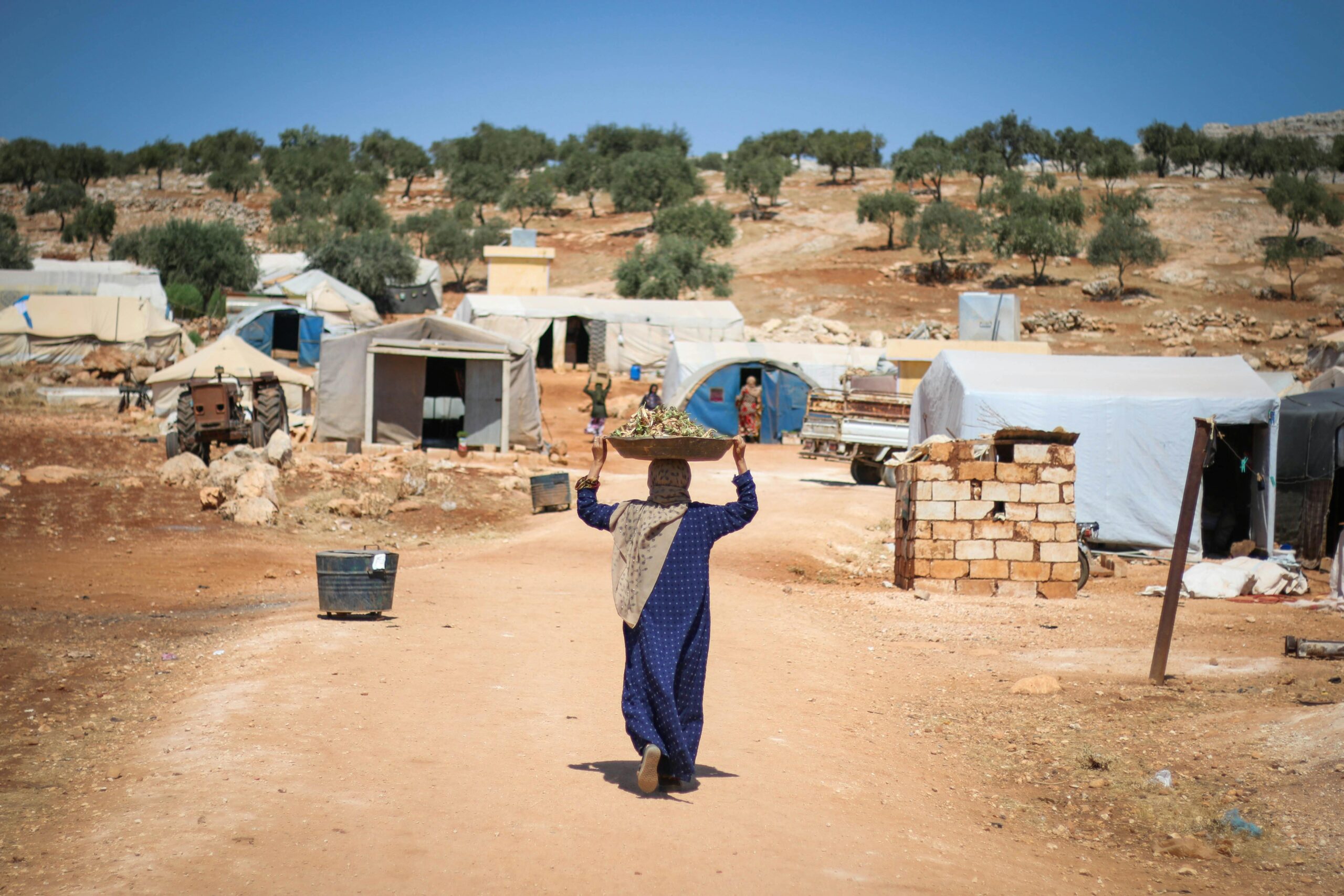
Policy Pathways to Economic Self-Sufficiency: A Comparative Study of Syrian Refugees
In a world where an increasing number of people are displaced for longer periods, safety from violence is only the first step toward a life of dignity. When refugees are denied meaningful access to work, education, and social services, they remain trapped in cycles of dependency that undermine both their rights and their host communities’ stability. However, policies that enable refugees to become economically self-sufficient can transform them into recognized contributors to local economies and social life. Perhaps nowhere are these tensions more visible than in the Middle East, where many Syrian refugees have spent more than a decade navigating the opportunities and constraints created by host-state policy choices.
The Syrian Civil War, which erupted in 2011, produced one of the largest refugee crises since World War II, with millions fleeing across the region and beyond. By 2015, Türkiye hosted over 2.7 million registered Syrian refugees while Jordan registered approximately 630,000, although the real numbers were likely higher in both cases. Today, over 3.6 million Syrians are registered as refugees with Jordan and Türkiye hosting some of the largest populations.
It can be argued that Türkiye’s relatively open legal frameworks compared to other Middle Eastern or European Union countries, and its investments in refugee access to employment, health care, and education enabled greater economic participation and resilience among Syrian refugees, albeit imperfectly. Jordan’s approach, by contrast, prioritized containment and short-term humanitarian relief over integration, resulting in widespread poverty, informal labor, and systemic dependency among refugee populations.
This poses the question: how can host states design refugee policies that promote long-term economic self-sufficiency rather than entrenching poverty, informality, and dependence on humanitarian aid? I address this by conducting a comparative study of Jordan and Türkiye between 2015 and 2023, examining how their differing policies on Syrian refugee integration have impacted refugees’ economic self-sufficiency. Economic self-sufficiency, in this context, refers to the capacity of Syrian refugees to independently meet their basic needs such as food, shelter, education, and healthcare through secure employment, entrepreneurship, or access to financial resources.
Türkiye’s early response to the Syrian refugee crisis was driven by the Justice and Development Party’s (AKP) ideological framing of Syrian refugees as “guests” and “brothers.” This narrative, rooted in Islamic solidarity and regional leadership ambitions, allowed the Turkish government to adopt an initially open-door policy that facilitated broad humanitarian assistance. Jordan’s response, by contrast, was cautious and shaped by historical experience. Having absorbed large amounts of Palestinian refugees after 1948 and 1967 and Iraqis after the 2003 U.S. invasion of Iraq, Jordan’s leadership, under King Abdullah II, was keenly aware of the demographic, economic, and political strains that new refugee influxes could cause. Jordan’s strategy emphasized tight control and containment of the refugee population, maintaining a clear separation between refugees and the host society, and heavily relying on international aid to sustain services. By 2015, both countries faced mounting pressure to transition from ad hoc emergency responses to more structured, long-term policy frameworks that could address the complex needs of millions of displaced people over extended periods.
In Jordan, the most significant policy initiative aimed at refugee integration was the Jordan Compact of February 2016. This agreement, signed between Jordan and major international donors such as the EU, the United Kingdom, and the World Bank, offered Jordan extensive development aid and trade concessions in return for commitments to improve Syrian refugees access to employment and education. On paper, the Compact promised to issue up to 200,000 work permits to Syrians, allowing them formal access to Jordan’s labor market. By 2017, only about 51,000 work permits had been issued. Several barriers contributed to this shortfall. However, as a result, by 2020, it was estimated that nearly 96 percent of Syrian refugees working in Jordan did so informally. A 2022 World Bank study reported that over 83 percent of Syrian refugees in Jordan lived below the poverty line, defined as living on less than approximately $3.20 per day. Access to quality education for Syrian refugee children was also severely limited, with only about 30 percent of secondary school-aged Syrians enrolled in school by 2021, compared to a 75 percent enrollment rate among Jordanian nationals.
Türkiye’s policy evolution followed a different trajectory. The Temporary Protection Regulation (TPR) issued in 2014 provided Syrians with legal residency, access to public healthcare, education, and protection from forced return. In January 2016, Türkiye introduced the Work Permit Regulation for Refugees, which, under certain conditions, allowed Syrian refugees to obtain work permits and participate legally in the labor market. Although restrictions remained, such as limitations by province and sector, this regulatory shift marked a significant move towards integration. By 2019, studies estimated that around one million Syrians were participating in Türkiye’s labor force. Syrian-owned businesses proliferated, with over 10,000 Syrian-run companies registered by 2021. Furthermore, by 2021, over 684,000 Syrian children were enrolled in Turkish public schools. Dropout rates among Syrian refugee students fell from around 40 percent in 2016 to about 20 percent by 2021, demonstrating the positive impact of Türkiye’s educational investments.
Ultimately, my comparative analysis of Jordan and Türkiye’s refugee policies between 2015 and 2023 shows that approaches emphasizing legal access to employment, education, and public services contribute significantly to improving refugee long-term economic self-sufficiency. Sustainable refugee policy must therefore prioritize legal access to work, education, and healthcare.


About Author/s