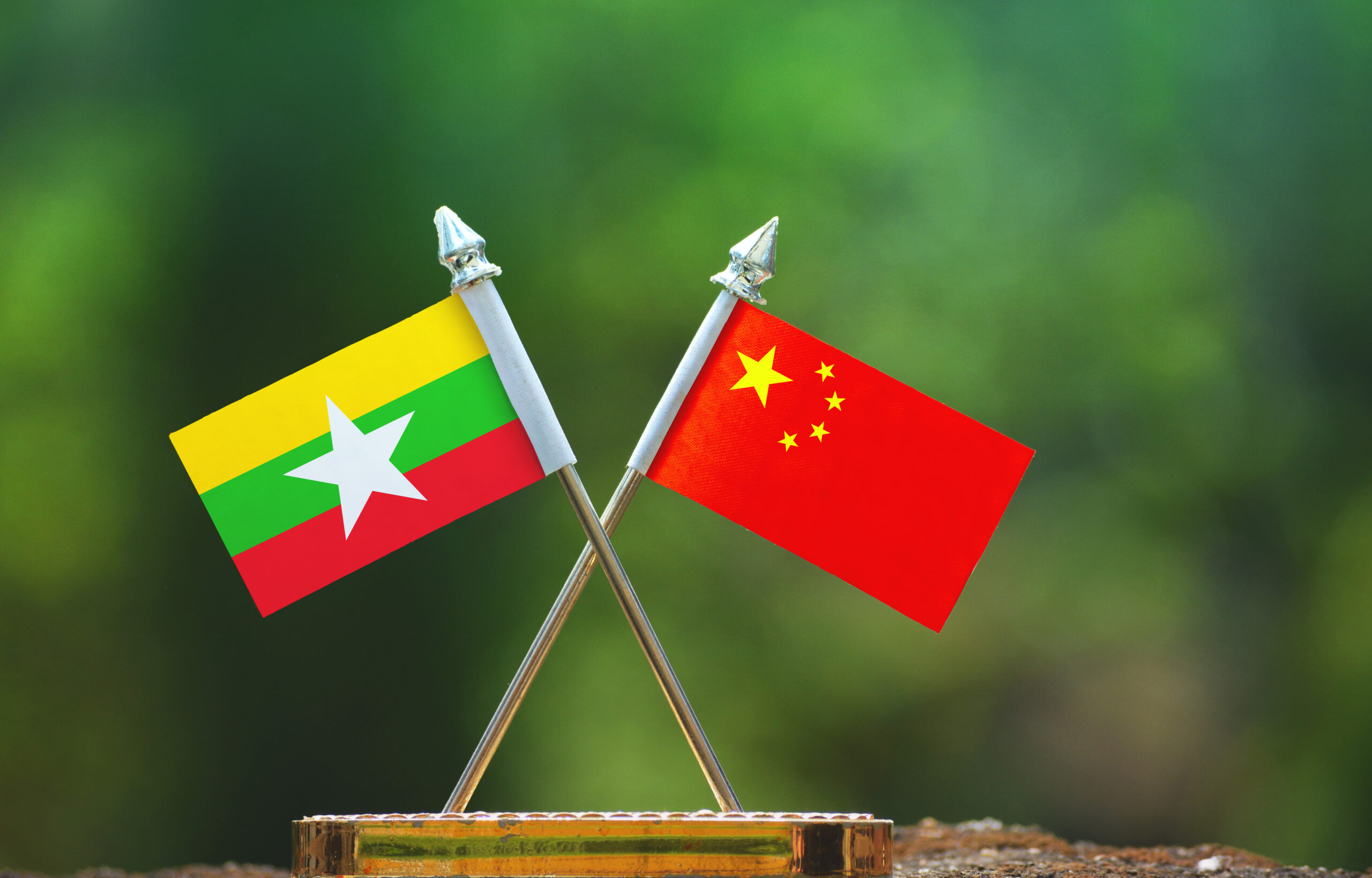
How China-Myanmar Relations Impact the Rohingya Crisis
Introduction
How do China’s geopolitical actions and aspirations impact Myanmar’s domestic politics, particularly regarding the Rohingya refugee crisis? Taking a closer look at China’s historical and present-day relations with Myanmar, including the actions it has taken geopolitically, and the likely motives for these, this post investigates China’s impact on Myanmar’s attitudes towards the Rohingya and overall domestic politics. This is important because the Rohingya crisis has been central to present-day Sino-Myanmar relations; accordingly, bringing an end to the crisis may require accounting for, or addressing, China’s role.
Discussion
Background
The Rohingya people, who predominantly lived in Rakhine State, Myanmar, have undergone immense repression at the hands of successive governments and the Bamar ethnic majority. Despite having lived in Myanmar for over a century, the Rohingya do not have citizenship rights there; the country’s 1982 Citizenship Law grants citizenship only to those who can claim ancestral roots there before 1823; it is accompanied by the denial of multiple other fundamental rights, such as the right to education, healthcare, movement, or marriage.
Since its independence from British rule, Myanmar’s military (the Tatmadaw) has historically controlled the country; side-by-side, it has historically played a long and extensive role in persecuting the Rohingya, in close sync with ultranationalist Buddhists. As a result of the Tatmadaw’s actions, multiple waves of violence and repression took place against the Rohingya that forcibly displaced many and rendered them refugees, including the 2016-17 ‘clearance operations’, consequently sparking the overarching Rohingya genocide and refugee crisis.
For its genocide, Myanmar has received heavy condemnation from the United States, Canada, and multiple European nations; several responded with sanctions or arms embargoes, even reducing military cooperation with Myanmar in the face of the Tatmadaw’s brutality. The then United Nations High Commissioner for Human Rights decried the atrocity as a ‘’textbook example of ethnic cleansing.’’ Yet one nation took a rather different stance: the People’s Republic of China. Instead of unequivocally condemning Myanmar’s actions, China defended Myanmar, describing the Rohingya crisis as a domestic affair and Myanmar ‘‘fighting terrorism’’; notably, Beijing stated that the crisis had roots in poverty or economic underdevelopment, even presenting its own considerable investments in Myanmar’s infrastructure (including oil and gas pipelines) as conducive to resolving conflict. In doing so, China downplayed the problematic ethnic relations and power dynamics leading to the crisis. China has attempted mediation between the Myanmar government and the Rohingya; it opposed international intervention and called for other countries to respect Myanmar’s sovereignty, consistently using its Permanent Member seat on the United Nations Security Council to block sanctions or resolutions penalizing Myanmar for its human rights abuses against the Rohingya.
Opportunities and scope for China’s influence
China historically has enjoyed significant influence in Myanmar’s domestic affairs, including during the recent civil war. While China has repeatedly pushed for repatriating refugees, its efforts to repatriate Rohingya refugees in Bangladesh back to Myanmar have largely failed to culminate in significant refugee returns; China’s refusal to denounce Myanmar’s cruelty ironically undermines repatriation efforts, preventing concessions that would allow Rohingya refugees to return under safe and voluntary conditions.
In fact, China’s continued diplomatic support for Myanmar may derive from a desire to acquire further concessions from Myanmar on infrastructure projects. Indeed, China has its hand in multiple major infrastructure projects in Myanmar, which is a valuable part of the Chinese Belt and Road Initiative (BRI). Rakhine State, home to the Rohingya, possesses vast reserves of oil and gas highly attractive to Beijing’s energy needs. One notable project in Rakhine State is the Kyaukpyu deep seaport, which offers China access to the Indian and Pacific Oceans, and by proxy, an alternative trade route to Africa and Asia free from US control like the Strait of Malacca. The Kyaukpyu seaport offers China valuable access to oil and gas.
Due to the economic importance of Myanmar, it is not surprising China’s contribution to–and both actual and potential influence over–Myanmar’s economy is considerable. Currently, China is Myanmar’s top trading partner. As of 2018, China had been the largest source of foreign direct investment (FDI) in Myanmar, with direct investment greatly exceeding that of five other key investing countries for over 20 years; the People’s Republic alone accounted for more than 26% in FDI. The two countries also share a 2000 km border. CMEC, for its part, further moves Myanmar into China’s sphere of influence. Beijing has proven to be especially aggressive when it comes to influencing Myanmar, at least in part to economically counterbalance the US; in fact, Sino-Myanmar relations constitute a special Pauk-Phaw (kinsfolk) friendship, and Myanmar was the first non-socialist nation to recognize and formalize ties with Communist China.
The strategic importance of Rakhine State is considerable for China, and the Myanmar government–considering its past history of land grabbing–may have an incentive to clear land in the name of development with the help of foreign companies, including Chinese companies. There is an extensive history of the junta in Myanmar expropriating land from smallholders without compensating them, as well as increased violence against the Rohingya and greater enforcement of land laws, specifically in the wake of attempts to promote foreign investment. The Myanmar government has constructed on sites where Rohingya villages originally stood before ‘’clearance operations’’ in 2017, with the Tatmadaw, commercial entrepreneurs, and Rakhine Buddhists participating in the ‘’spacio-cide’’ of the Rohingya for land, profit, and so-called national security. In addition, Myanmar’s ethnic cleansing of the Rohingya–and the destruction of over 300 villages–is rooted in a desire to support development, specifically in regard to constructing trade and security networks with China and India.
Outwardly, China claims to favor ‘’nonintervention’’ in other countries’ affairs, including in regard to Myanmar. However, while China may not favor direct intervention in other countries’ affairs, it may not be above encouraging other countries to adopt its authoritarian statehood model; specifically, the People’s Republic has established training programs marrying ‘’lessons’’ on managing society and the economy–lessons on law enforcement and public administration, for instance–with authoritarian principles, under the pretext that said principles lead to economic gain.
Limitations to China’s control
There are some potential limitations to China’s control over Myanmar. The impact of post-COVID slowdowns on China’s economy and infrastructure projects may induce Beijing to prioritize domestic affairs over international affairs, including Naypyidaw’s domestic affairs. Indeed, China-Myanmar trade has faltered with the current civil war, with no new notable Chinese investments occurring in 3 years, suggesting Beijing would rather wait for stability than continue risky projects.
Furthermore, several Chinese investment projects are in regions of Myanmar under the control of ethnic armed organizations (EAOs) in conflict with the junta; while this situation has granted Beijing the opportunity to portray itself as a useful ally to Naypyidaw in regard to brokering negotiations–or potentially even find alternatives to the Tatmadaw–Beijing has also run afoul of accusations that it has inflamed existing conflicts. These criticisms exist alongside existing criticisms of China for its failures to repatriate the Rohingya or hold Naypyidaw accountable; to date, very few Rohingya refugees have agreed to voluntarily return to Myanmar, given the latter’s refusal to promise refugees a secure and sustainable living environment or grant them citizenship.
One potential nexus of disagreement between China and Myanmar exists in the form of Myanmar’s online scam centers, which have ensnared Chinese citizens in forced labor for global cyber-scams; furthermore, their connections to armed groups and overall conduct have led Beijing to pressure Naypyidaw into clamping down on such activities. However, the Tatmadaw may be turning a blind eye to scam dens in exchange for additional tax revenues. For its part, Beijing has provided ‘’tacit approval’’ for anti-junta groups that clearly articulated a drive to take down the scam dens.
Conclusion
China has a significant direct and indirect influence on Myanmar and on the Rohingya crisis. China’s actions to insulate Myanmar’s government from reprisal (including in the civil war) have at a minimum slowed down potential changes or reforms to Naypyidaw’s government. Furthermore, China’s actions originate from a combination of economic interests and political-security motives, including an interest to maintain a strategic regional ally and continue benefiting from reliable access to significant natural resources.
For the foreseeable future, I predict that China–albeit also maintaining relations with other groups or factions to a lesser degree–will likely continue supporting the junta until it falls. Similarly, the current approach Myanmar has taken to the Rohingya crisis (specifically, its emphasis on ‘’development’’ that renders Myanmar itself economically and politically dependent on China) is unlikely to change. However, the civil war remains inconclusive, and while a junta defeat by itself may not end the special friendship between both states, it may potentially weaken Chinese influence over Naypyidaw.


About Author/s