How Fear of Deportation Silences Immigrant Survivors of Gender-Based Violence
Heightened immigration enforcement across the United States has created a dangerous environment for immigrant survivors of gender-based violence whose fear of deportation or arrest by immigration enforcement prevents them from reporting abuse. This threatens the well-being of victims while contributing to a system in which public safety and justice are compromised for both immigrant communities and the entire United States public.
Gender-based violence is often rooted in unequal power dynamics in which perpetrators hold some form of authority over the victim. Immigrant experiences of gender-based violence occur within this context as an undocumented status can create a power imbalance in which abusers weaponize immigration status as a tool of control. Many women experience exploitation by partners using their status against them, threatening to turn them into immigration agents and get them deported if they call for help. Additionally, immigrants are more likely to experience social or economic vulnerabilities such as a lack of familial support in the United States or financial instability that leaves them dependent on a partner. This increased vulnerability is another dangerous power dynamic as reliance on others places them in a position with less authority and options. Factors such as lack of documentation and financial means increase immigrants’ risk of gender-based violence victimization as well as reduce their ability to seek help due to the risk of legal retribution or deportation.
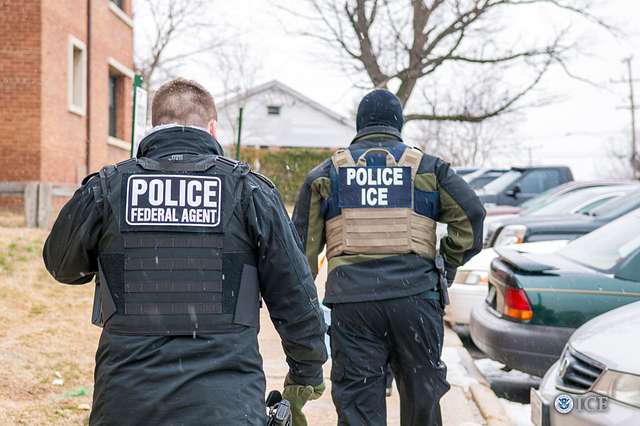
Cooperation between local police agencies and federal immigration enforcement has increasingly blurred the lines between immigration enforcement and policing, and added to confusion and fear among survivors. There has been an increasing number of cases of police around the country contacting immigration enforcement about survivors who contact them to report crimes such as domestic abuse. Police contacting immigration authorities sends the message to survivors that enforcing legal status is more important than ensuring victims of crimes are safe. A survey of survivor advocates conducted in the s found that immigrant survivors are deeply afraid of contacting the police to report domestic violence and sexual assault due to the fear that law enforcement may contact federal immigration authorities. 76 per cent of advocates reported that immigrant survivors are afraid to contact police while 50 per cent of advocates have worked with immigrant survivors who dropped civil or criminal cases against abusers because of fear. Fear leaves many survivors unable to seek help, placing them in danger of continued abuse, and weakening trust in the institutions that are supposed to protect. If victims can’t call the police, who else can they call?
Additionally, legal protections in place to prevent violence against women are insufficient as they are repeatedly undermined and under direct attack by the Trump administration. The Violence Against Women Act (VAWA) was the first comprehensive federal law aiming to prevent and address gender-based violence, such as domestic violence and sexual assault, in the United States. One such protection under VAWA is the U visa, a special visa that grants victims a pathway to permanent residency in exchange for their cooperation with law enforcement. This was put into place to allow law enforcement to better serve victims of crimes while also strengthening their ability to prosecute perpetrators of gender-based violence. Concerningly, these visas are already incredibly backlogged, with the average wait time exceeding 15 years, meanwhile, new policies by the Department of Homeland Security are neglecting U visa protections and deporting applicants, contrary to the policies protections Immigration and Customs Enforcement (ICE) agents are no longer required to try to identify if a person is a victim of a crime when determining their enforcement actions against them. This means that survivors who have applied for legal status under United States law may still be apprehended by ICE and no longer be able to exercise their legal rights and protections they are eligible for. The United States efforts to protect women and end gender-based violence can only be effective when all victims are protected, regardless of immigration status.
Furthermore, the implication that immigration status is a greater crime than gender-based violence is a dangerous precedent that undermines the United States’ defense of human rights. Gender-based violence is interpreted by the Convention on the Elimination of All Forms of Discrimination against Women (CEDAW) Committee’s General Recommendation 19 as a form of “discrimination against women” and is thus prohibited under international humanitarian law (Otto, 2022). Gender-based violence refers to all harmful acts directed at an individual or a group based on their gender, with the UN Women also clarifying gender-based violence to be “rooted in gender inequality, the abuse of power and harmful norms” (Otto, 2022). When people are too afraid to report gender-based violence against them, those rights are effectively denied, and the denial of protection is a direct violation of survivors’ human rights. This system erodes community confidence in law enforcement, increases perpetrators’ likelihood to reoffend, and thus weakens federal and local crime prevention ability overall. Additionally, gender-based violence has a heavy impact on families and communities, as it can lead to trauma for children and families, and disruptions to productivity such as in school or workplaces. Additionally, gender-based violence is cyclical, meaning children who witness or are victims of violence are more likely to be victims or perpetrators later in life. A society where people cannot safely report abuse is one in which human rights are not protected, a reality that undermines legal institutions and allows violence to persist.
The United States government continues to undermine immigrants legal and human rights in the name of immigration enforcement, perpetuating a culture of distrust in legal institutions. When roles are blurred between police protection and immigration enforcement, survivors are scared into silence and as a result communities and all women’s safety is threatened. Law enforcement must prioritize protecting survivors, upholding legal protections, and decreasing the climate of fear that threatens the safety of survivors everywhere.
List of references:
Alliance for Immigrant Survivors. Fear and Silence: 2025 Insights from Advocates for Immigrant Survivors of Domestic Violence, Sexual Assault, and Human Trafficking. December 10, 2025. https://www.immigrantsurvivors.org/fear-and-silence-report
deGrood, Matt and Sam Gonzalez Kelly. “She Called 911 to Report Domestic Abuse. Then Houston Police Called ICE on Her.” Houston Chronicle. June 24, 2025. https://www.houstonchronicle.com/news/houston-texas/immigration/article/houston-police-ice-domestic-violence-20382891.php
Kippert, Amanda. “Intergenerational Violence: How to Break the Cycle.” DomesticShelters.org. March 17, 2025. https://www.domesticshelters.org/articles/ending-domestic-violence/intergenerational-violence-how-to-break-the-cycle
Michaels, Samantha. “She Helped the Authorities Deport Her Abuser. Then They Deported Her Back to Him.” Mother Jones. April 6, 2026. https://www.motherjones.com/politics/2026/04/u-visa-t-violence-against-women-act-ice-trump-deportation-lawsuit/
Otto, Dianne. “Women’s Rights,” in Daniel Moeckli et al.(editors), International Human Rights Law (4th edition), Oxford University Press, 2022.
Short, M.. “My Husband Told the Sheriff to Report Me to ICE.” The Cut, October 29, 2025. https://www.thecut.com/article/husband-reported-wife-ice-domestic-violence-deportation-threats.html
Tahirih Justice Center. “Celebrating the Anniversary of VAWA Amid Ongoing Attacks on Immigrant Women.” September 13, 2025. https://www.tahirih.org/news/celebrating-the-anniversary-of-vawa-amid-ongoing-attacks-on-immigrant-women/
Tan, Sze Eng and Katie Kuschminder. Migrant experiences of sexual and gender based violence: a critical interpretative synthesis. Global Health 18, 68 (2022). https://doi.org/10.1186/s12992-022-00860-2
USCIS. “Victims of Criminal Activity: U Nonimmigrant Status.” Last modified January 2025. https://www.uscis.gov/humanitarian/victims-of-criminal-activity-u-nonimmigrant-status.
US Department of Justice. “Violence Against Women Act.” Office on Violence Against Women, accessed May 1, 2026. https://www.justice.gov/ovw/violence-against-women-act/.


About Author/s