A Child’s Journey: From Kabul’s Dreams to Survival in Pakistan
The walls of exile echo with silence, but inside that silence, hunger, fear, and survival scream loudly. In refugee settlements across Pakistan, hunger gnaws at bellies, shelters are makeshift, and work is a privilege. For Afghan refugees, food, shelter, and dignity are not rights, but distant dreams. Before fleeing to Pakistan, I was a high school student in Kabul, my heart full of dreams and my future bright with possibility. Living with my family, we had the simple joys of life: food to eat, a home to sleep in, a yard to play in, and the freedom to move without fear. I spent my days laughing with friends, pursuing knowledge in school, and dreaming of becoming a doctor. But beneath the surface, a storm was brewing, and soon our world would be torn apart.
Everything changed in August 2021. When the Taliban took over, my father—the bedrock of our family, the one who made us feel safe and loved—lost his job as a government prosecutor. Because of his position, he was now at grave risk. Former government employees were seen as enemies, and soon we became targets. Anonymous calls began to reach us, warning us to leave or face severe consequences. The man who had always been our shelter and guide, our everything, was now powerless.
Security vanished, and fear crept in, suffocating us. Neighbors whispered of families like ours fleeing—some to Iran, others to Pakistan. Then came the moment that made our decision unavoidable: a direct message warning that our home was being watched. We knew we could not stay.
We had little time to pack. Each moment we had taken for granted—our home, our yard, our village—was slipping away. We were not just leaving a country; we were losing a life. We left with hearts heavy, carrying both fear and a fragile hope that across the border, we might find safety—and perhaps a future.
Crossing into Pakistan, I remember every detail: my foot freezing as it crossed the border, stepping into a strange world where nothing was certain. I could not have imagined how quickly everything would collapse. We arrived not with hope, but fear, confusion, and emptiness. Survival was our only goal, replacing every opportunity we had dreamed of in Afghanistan.
What we were living through was not unique. Across Pakistan, The United Nations High Commissioner for Refugees (UNHCR), reports that hundreds of thousands of Afghan refugees struggle to access basic necessities such as food, shelter, and healthcare. Echoing this, the International Organization for Migration (IOM) highlights that Afghan refugees often lack access to essential services, which exacerbates their vulnerability and puts them at risk of food insecurity.
We lived in a small, dark, suffocating room in Rawalpindi, seven of us crowded into one cramped space, where breathing felt heavy with fear and exhaustion. The room felt too tight, leaving us trapped, powerless, and quietly breaking inside.
Time passed only through hunger, a constant, painful ache slowly draining strength and hope. Many days we had no food, and the emptiness felt deep and unbearable.
Clean water was uncertain, something we waited for with silent worry. Without legal documents, every moment was filled with fear—arrest, being sent back, or losing this fragile shelter that was our only protection.
Life kept getting harder. My two younger brothers worked long hours in a sandal factory, their small hands worn by labor. They left early in the morning and returned exhausted, earning almost nothing—just enough to survive. This is not just our story. Organizations such as UNICEF warn that refugee children are often forced into labor, losing access to education and the chance for a future. My brothers were living that reality every day.
My father had tried to protect me from that life for as long as he could. He believed in my education—he knew how deeply I wanted to continue my studies and become a doctor, and he held onto that dream for me even when everything else was falling apart. My younger brothers had started working first to help us survive, while my father still tried to hold onto my future—the one we were slowly losing. But hunger does not wait, and hope cannot survive on emptiness forever.
One afternoon, I was sitting quietly with my younger brother, lost in thoughts of what lay ahead. When my father opened the door, something in his face made my chest tighten. He looked at me for a moment, as if searching for the right words, then placed his hand on my right shoulder —his eyes heavy, urgent—and, in a quiet, gentle voice, hesitantly asked me to go outside and find work. That moment changed everything. It was the moment I felt my childhood slip away. I stepped into a world where survival was no longer a choice, but a duty I walked those streets afraid and silent, each step heavier than the last. as if I were carrying more than just my own weight.
The heat was unbearable, and everything felt unfamiliar. For hours, I worked beside my brothers, my body weak, my mind numb. That day felt endless. I watched time crawl forward, pain spreading through my body in ways I could not explain. When I returned home empty-handed, reality crushed me—no food, no money, no hope.
That night, when my father saw my pale, exhausted face, he sighed deeply and decided I should not go out like that again. For weeks, we lived in uncertainty, sometimes surviving on a single meal a day, holding on to the last fragile pieces of hope we had left.
Then, unexpectedly, something changed. Early one morning, as the sun rose, I was still asleep, deep in dreams of food or work. My father’s phone sat on the shelf; a ray of sunlight hit it, and it rang, waking me. When he picked it up, he was called to a meeting by the IOM, an organization supporting Afghan refugees. I watched him leave quickly that early morning, carrying a fragile sense of hope.
I lay on the floor, covered by a thin blanket, wondering if anything would ever change. When he returned, I lifted my head, my eyes fixed on his hands—small bags of rice, oil, and beans—but more than that, he carried hope that I had been waiting for since I left Afghanistan. He set them down on the floor and knelt beside me, gently resting his hand on my forehead, and spoke softly: “My son, there may be an opportunity for you at a pharmacy, because of your abilities.”
In that instant, something inside me broke open. I exhaled and tears welled in my eyes. After such darkness, even a small light was overwhelming. I stood, kissed his hand, and stepped outside, unable to believe what I had just heard. For the first time since fleeing Afghanistan, in a long while, I felt something I had almost forgotten: hope.
What we were living through was not unique. Across Pakistan, the United Nations High Commissioner for Refugees reports that Afghan refugee children in Pakistan are deprived of essential services such as food, clean water, shelter, and protection. The IOM reports that since 2023, hundreds of thousands of Afghans have been forced to return, pushing already vulnerable families deeper into poverty. Meanwhile, Human Rights Watch emphasizes that many refugees live under constant fear of arrest, with limited access to work, housing, and basic safety.
I did not need reports to understand this reality—I was living it. My brothers worked long hours just to delay hunger. We waited for clean water with quiet fear. Some days, even a single meal felt uncertain. As researchers such as Edris Ahadi have observed, Afghan refugee communities face long-term deprivation, where survival becomes the only priority and basic human rights remain out of reach. Behind every statistic is a real story like mine: a child forced into labor, a family struggling for food, a household surviving on one meal a day. A future shaped not by choice, but by necessity.
As Khaled Hosseini, United Nations High Commissioner for Refugees Goodwill Ambassador, once wrote: “It always strikes me how fragile a childhood can be, especially when basic rights—food, shelter, freedom—become luxuries beyond reach.”
Afghan refugees are not asking for sympathy; they are asking for dignity. They are asking for protection, for human rights. We do not wait for charity; we wait for justice —so that no child has to trade education for survival again.
And even in exile, even in silence, sometimes it only takes one voice to remind us: our future is not over—and no child’s dream should be lost to survival.
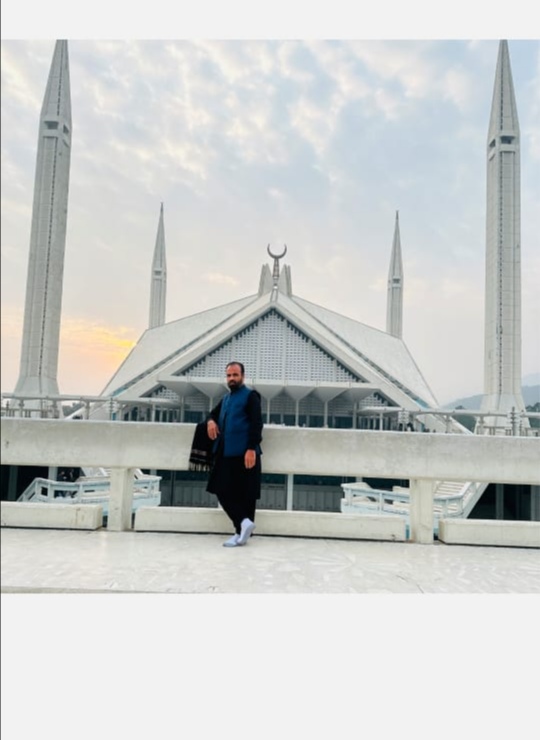
Feature image: My father at the Faisal Mosque in Islamabad, as harsh conditions forced him to leave home behind, seeking work and food for our family to survive in uncertain times.


About Author/s