12
Jan
German Political Identity and Approaches to Responsibility In German Asylum Policy
This post forms part of our series in showcasing abstracts of presentations featured at our annual postgraduate interdisciplinary conference on refugee and forced migration research, hosted in October 2017 at The University of Melbourne. Kelly Soderstrom The norm of responsibility is central to the protection mandate inherent in asylum policy. Norm construction and codification... Read More

9
Jan
Collective responses and the university: Challenging the exclusion of people seeking asylum from Higher Education
This post forms part of our series in showcasing abstracts of presentations featured at our annual postgraduate interdisciplinary conference on refugee and forced migration research, hosted in October 2017 at The University of Melbourne. Dr Caroline Fleay In contrast to Australian Government policies that aim to prevent the arrival of people seeking asylum by... Read More

3
Jan
Durable Solutions for Australian Refugee Partnerships
As of the end of November, the US will have reportedly resettled somewhere between 110 and 140 refugees from Manus Island, Papua New Guinea (PNG) and Nauru, with between approximately 1200 and 2000 refugees remaining on the two islands. Up to this point, what has been termed the ‘Pacific Solution’ had not been effective in... Read More

15
Dec
Mental Health Screening Tool For Asylum Seekers And Refugees: The STAR-MH
There is no extant brief and sensitive mental health screening tool for asylum seekers and new refugees (ASR) designed to be administered by non-mental-health trained workers in receiving host nations. The STAR-MH was iteratively developed and piloted with adult ASR without a known current psychiatric diagnosis. 192 participants from 37 countries were administered the... Read More

8
Dec
Supporting scholars seeking a new intellectual home – what can we do?
This article first appeared on The Research Whisperer, and is a collaborative effort by members of the Global Young Academy, the Young Academy of Scotland and Research Whisperer. It was developed by Dr Eva Alisic, Dr S. Karly Kehoe, Debora Kayembe, Dr Shawki Al-Dubaee, and Jonathan O’Donnell. Academic solidarity is a core value shared by researchers all... Read More

5
Dec
A Case for Altruistic Smuggling and Human Emotion
In the summer of 1999, I started following North Korean refugees as a researcher. I was at the border town in China, just a few miles from North Korea, interviewing North Korean women and children who crossed the borders illegally in search of freedom, food, shelter and employment. North Korea and China have a bilateral... Read More

20
Nov
Book Review: “Bridging Troubled Waters – Australia and asylum seekers”
“Bridging Troubled Waters – Australia and asylum seekers”, Tony Ward, Australian Scholarly Publishing Ltd, North Melbourne, 2017 Why has refugee policy been so haphazard over the years, and failure so common? Tony Ward utilises his economics and government background to assess Australia’s policies for their effectiveness (achievement of objectives) and efficiency (least-cost provision). His... Read More

10
Nov
South Africa and its current responses to combating human trafficking
Human trafficking is one of the most egregious human rights violations in the current era, bringing high earnings to traffickers through the acquisition and exploitation of human beings by improper means such as coercion, fraud or deception as it is defined in Article 3(a) of the 2000 United Nations (UN) Protocol to Prevent, Suppress and Punish... Read More

2
Nov
‘Boat people’ and borders: changing political debate on asylum seekers
Since the arrival of the first Vietnamese refugees in the mid-1970s, Australia has maintained a curious fascination with ‘boat people’. Just under 70,000 people have sought asylum in Australia in this way since 1976. By comparison, over the ten-year period to 2015, Australia welcomed more than 80,000 recognised refugees, more than one million permanent migrants,... Read More
31
Oct
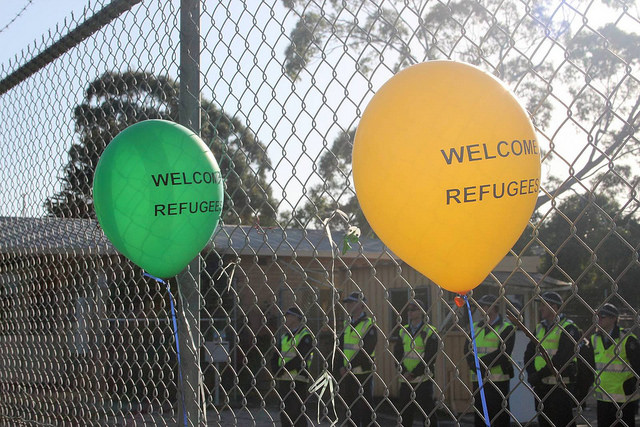
History suggests refugees on Manus and Nauru can be resettled in Australia without reviving boat arrivals
Last month 54 refugees departed Manus Island for resettlement in the US under an agreement between the Turnbull and Obama administrations. Curiously, the government has not expressed concern that this will increase asylum seeker boat traffic from Indonesia to Australia. For most refugees, the US is as attractive a destination as Australia. So why is... Read More