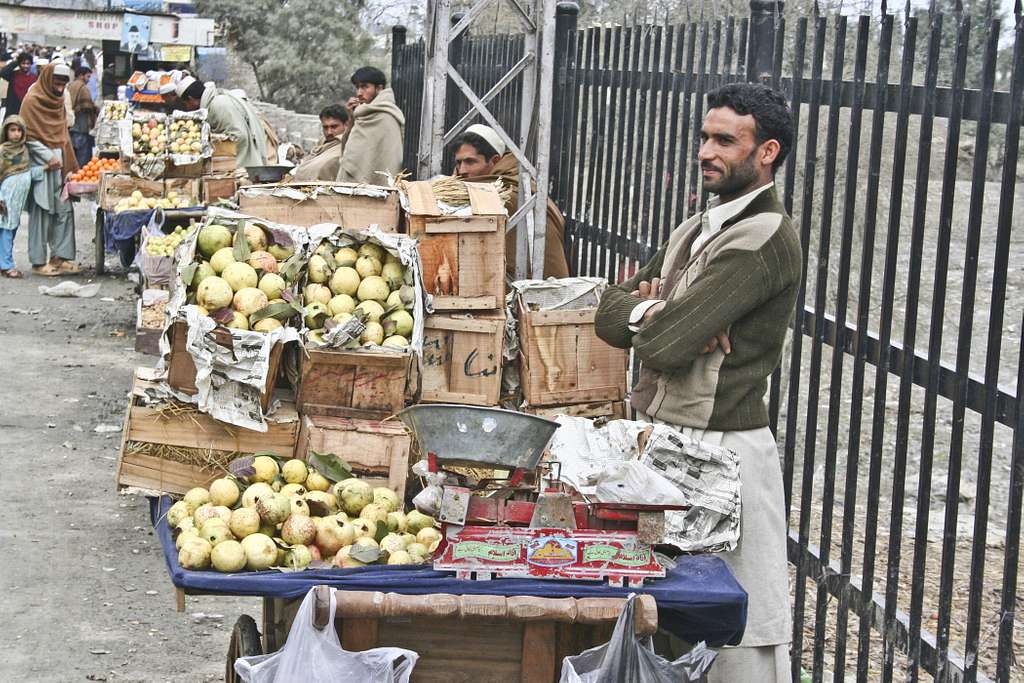
Beyond the Fence: Everyday Life on the Pakistan–Afghanistan Border
For some people on the Pakistan–Afghanistan frontier, crossing the border means going to work, visiting family or attending a funeral. Tighter documentation rules and recurring closures have made these ordinary journeys harder. Security concerns matter, but a single approach to border control can impose very different costs on different travellers. How might border policies recognise the needs of communities whose lives have long extended across the boundary?
Near Chaman, on the Pakistan–Afghanistan frontier, lies Kili Lala. A 2025 report by the Human Rights Commission of Pakistan (HRCP) describes how the border fence separated the village from its graveyard. A respondent in Chaman told HRCP that Pakistan’s Frontier Corps soldiers allowed limited funeral processions through a small, guarded opening but prevented subsequent visits for rituals and religious occasions.
This may appear to be a small story alongside the armed clashes and political disputes that dominate geopolitical coverage of this border. Yet, it reveals something important. The person trying to visit a grave is not looking for permanent settlement abroad. They are trying to maintain a familiar practice in a place where an international boundary now interrupts their daily life.
Reporting on border controls and refugee returns foregrounds security, documentation and tensions between Islamabad and Kabul. These questions deserve attention. Yet so do people crossing at Chaman–Spin Boldak, Torkham and elsewhere to see relatives, earn a living, buy goods, attend a funeral, or visit a grave. What happens then, when border control becomes stricter in a region where such repeated ‘everyday’ crossings have long been normal?
A border drawn across existing ties
The present frontier traces back to an 1893 agreement between Afghanistan’s ruler, Amir Abdur Rahman Khan, and British representative Mortimer Durand. Pakistan inherited the line in 1947 and regards it as its international border. Successive Afghan governments have disputed its status. The line also runs through areas where Pashtun and Baloch communities have long maintained family and commercial connections across what is now an international boundary.
Recognising these connections does not settle the political dispute or mean that border checks should disappear. Instead, it shows how the map of a state and the geography of a community do not always match. Someone living far from the frontier might cross an international border once a year. A resident of a border village might have relatives, customers and work just a short distance away on the other side.
Such movement is not always migration for settlement. It may be regular, local and essential to everyday life. Treating every journey as the same kind of cross-border activity overlooks those differences.
When everyday travel requires formal documents
Crossing rules have differed between checkpoints. The Afghanistan Analysts Network (AAN) reported that passport and visa requirements tightened at Torkham from 2016, while some Chaman and Spin Boldak residents obtained renewable border passes using identity documents. It also documented Pakistani residents working across the frontier. Access therefore depended on the crossing and the documents officials accepted.
Pakistan began fencing large stretches of the border in 2017. The subsequent one-document regime, announced in 2023, made passport-and-visa requirements central to entry from Afghanistan, replacing more flexible local practices. Pakistani officials have defended stricter documentation as a means of deterring militants and smugglers. Identity checks serve clear purposes, particularly in a region affected by violence.
But the practical effects differ. A planned visit may be delayed; a funeral cannot. Caring for an older relative may require several trips rather than one. Documents may expire, passport pages may fill up, and a checkpoint may close even when the traveller has complied with the rules.
The costs of crossing again and again
These difficulties weigh especially heavily on people with low or irregular incomes. During fieldwork between March and July 2025, HRCP recorded concerns about passports filling with entry and exit stamps. One respondent explained that repeated journeys could exhaust the pages, forcing workers to renew passports and miss paid work. These interviews cannot represent every household, but highlight renewal fees, travel costs, waiting times and income lost during closures.
Smaller traders face further obstacles. Permission for a person to cross is not necessarily permission to carry goods. Customs rules, work arrangements and personal travel documents serve different purposes. AAN’s 2020 report also documented additional difficulties for women and children without identity documents; tighter controls do not affect everyone within a household equally.
Taken together, these accounts suggest that asking whether a border is simply open or closed misses important differences. Policies should distinguish daily workers, family visitors, small traders, truck drivers and people returning to Afghanistan.
When a border “reopens”, who may pass?
Closures make these distinctions visible. Following clashes in October 2025, major crossings were shut to ordinary travel and trade. In November, Torkham partially reopened for Afghan returns, while other movement remained restricted. On 26 March 2026, it briefly reopened for one-way returns to Afghanistan; returns were suspended the following day after a security incident. An announcement that a crossing is “open” does not tell residents whether they can use it.
The first questions are simple: open for whom, in which direction and for what purpose? A lorry carrying goods, a worker travelling to a job, a family member visiting relatives and an Afghan being returned from Pakistan may all approach the same gate. Their legal status and reasons for travelling are different.
Security threats cannot be dismissed. On 24 September 2026, Pakistan said it had struck sites in Afghanistan used for drone operations. Afghan Taliban authorities reported civilian deaths and denied launching the drones. Islamabad has accused Kabul of harbouring militants responsible for cross-border attacks, which the Taliban deny. These disputes can change border conditions rapidly. Yet, security measures can impose lasting economic and social costs on people outside the conflict.
What can law—and policy—address?
The law provides different starting points for different travellers. Article 15 of Pakistan’s Constitution protects citizens’ right to remain in Pakistan and, subject to reasonable legal restrictions in the public interest, enter and move within it. The Passports Act 1974 regulates citizens’ travel documents, while the Foreigners Act 1946 governs non-citizens’ entry, presence and departure. These provisions do not create a general right to enter the neighbouring country without permission.
International human rights law is relevant too. The International Covenant on Civil and Political Rights protects, among other things, movement, family life and the right to leave a country, while allowing certain lawful restrictions. It does not establish unrestricted entry into another state. The legal position of a Pakistani returning home therefore differs from that of an Afghan visitor or a person seeking protection.
Because the categories differ, legal arguments alone cannot provide a single answer. Policymakers still need to decide how to keep identification and security checks workable without making every short, necessary journey unusually expensive or difficult.
Lessons from other borders
There are examples to learn from, although none can simply be copied. The European Union’s local border traffic framework allows member states to agree special arrangements with neighbouring countries for eligible border residents. Such permissions have conditions and geographic limits. In South Asia, India–Bangladesh border haats provide controlled spaces for small-scale local trade, rather than general access for family visits or employment.
Pakistan and Afghanistan offer a more immediate example. In 2024, they agreed to use Temporary Admission Documents for commercial vehicles and their drivers and assistants. This targeted a particular activity, not every border resident. It is instructive for policymakers designing local mobility arrangements: different forms of movement may call for different, clearly defined rules.
A more practical discussion would ask which journeys are genuinely local and recurring, how identity can be verified, what security safeguards are necessary and whether narrowly tailored permits could ease certain crossings. The needs of families, workers, traders and people returning to Afghanistan should not be collapsed into one category.
Looking beyond the fence
Sovereignty, security and tensions between the Pakistani and Afghan governments will continue to shape the frontier. Historical connections cannot remove those realities. But border policy also shapes access to livelihoods, family relationships and community practices.
Kili Lala makes the human consequences visible. A guarded gate may allow a burial without permitting later visits to the graveyard. A valid passport cannot guarantee that a crossing will be operating. A gate reopened for one-way returns may remain closed to workers and families.
The aim is not to abandon documentation or give everyone unrestricted access. It is to recognise that people cross for different reasons, often as part of ordinary social and economic life. Who can move, under which rules, at what cost—and what happens to a community when those rules change suddenly? Any serious discussion of border governance should begin by asking those questions of the people who live there.


About Author/s