The Politics of Border Control: Refugees as Bargaining Chips in Foreign Policy
The ripple effects of civil wars, authoritarian crackdowns, economic crisis, climate change related natural disasters, and systemized inequality have all contributed to the runaway expansion of forced displacement that has taken place in the world in the twenty first century.
What is new in more recent times is not only the continuity of forced displacement, but the global normalization of using refugees as political tools. Although politicization has historical roots, what is new now is the concerted level and openness with which both authoritarian and democratic states alike deploy displaced populations not as a crisis spin-off, but as a matter of foreign policy design. As per United Nations High Commissioner for Refugees (UNHCR) report, a staggering amount of 123.2 million people had been forcibly displaced by end of 2024. The report indicates that one in every 67 people have been displaced from their homes, a figure that has doubled compared to the last decade. People are swarming from the devastated ruins of Syria and Afghanistan, the scorching dappled umbra of Saharan Africa and border lines of Central America fleeing the conflicts in search of safety, at a number even greater than post-world war period
The use of refugees as bargaining chips in global diplomacy has become more troubling, even if it happened at the catastrophic humanitarian cost of such migration.
This trend examines the mechanisms through which governments are increasingly taking deliberate control of refugee flows to further their foreign policy goals, rather than simply to counter them. Under this new trend refugees are no longer the victims of crisis to be harbored rather they are tools of coercive diplomacy, a tool to exert pressure on hostile governments, force concessions, or shift blame. Authoritarian regimes are not the only ones taking this approach. Democracies also joined this geopolitical game, solidifying border militarization, outsourcing refugee containment to neighboring states, and tying humanitarian commitments to political and economic interests.
State interests in each of these instances prevail over human lives at the cost of an international refugee trend built on moral obligation and international law. There is a need to re-establish an affirmative response based on protection, human dignity and mitigating the politicization of displacement.
The weaponization of displacement worldwide
Governments around the world are willingly taking advantage of refugee populations in order to establish a strategic edge. These examples are regional in scope and had different political objectives but the same strategies.
One of the best examples is Turkey, a major player in the West Asia (Middle East). Turkey, where almost 4 million Syrian refugees live, and the European Union reached a controversial deal in 2016 under which Turkey would stop the flow of refugees in exchange for billions of dollars of aid and political benefits. Since then, Turkey’s President Erdogan has made repeated threats of mass migration into Europe as a means of extracting more concessions.
When the Taliban took over power in Afghanistan 2021, millions of people crossed borders in search of refuge. Pakistan a country which proactively engaged with Afghan immigrants has progressively utilized restrictive policies and deportation threats to exert leverage on both the Taliban and western nations, in exchange for financial and political concessions for keeping aid flowing.
After having escaped genocidal violence in Myanmar, more than a million Rohingya Muslims are stuck in Bangladesh. Initially lauded for its humane gesture, the government of Bangladesh has since been incensed and threatened to send refugees to far flung islands while using sheer numbers to pressure the international Community to increase aid and provide political action against Myanmar. Southeast Asian national governments, such as Thailand and Malaysia, have forced Rohingya asylum seeker vessels back to sea, tending to maroon them in the middle of international water. This policy effectively passes the buck while migration crises are the cover for domestic security goals.
During the 2024 US presidential elections, anti-immigration has emerged as a prominent slogan by some candidates as their main agenda of their campaign and some harsh promises of deportations and sealed borders were made. Across Europe, deals were struck to keep refugees out, often at great human cost. A vast number of parties and political leaders have reached agreements and made the deal to implement hard-line restrictive policies including strict border controls, restrictive immigration policies and screening of immigration application at EU borders, aimed at keeping migrants and asylum seekers out. Additionally, from Italy to the United Kingdom, Xenophobic rhetoric has become a primary focus of many right-wing parties’ during electoral campaigns. In 2024, Italian Prime Minister Giorgia Meloni’s government launched a scheme to detain immigrants and signed a controversial agreement with Tunisia and Albania to process asylum seeker applications outside Italian territory. The United Kingdom pushed forward and launched a plan to deport asylum seekers to Rwanda, a policy initiated by the UK Conservative Party to target and win over voters who are against immigration policies. Viktor Orbán has labeled immigration as a threat to national identity in Hungary. A Nationalist rally in France led by Marine Le Pen, and Alternative für Deutschland (AfD) in Germany have also gained popularity by promising anti-immigration laws and tightening the borders.
Mexico served as a US buffer within the Americas, especially through policies like Title 42 expulsions and remains in Mexico. Mexico economically and diplomatically benefitted by assuming enforcement duties. In turn, Guatemalan, Salvadoran, and Honduran refugees are still regarded as geopolitical liabilities rather than individuals who require protection. Central American migrants and others are held in limbo, caught between politicians on both sides of the border fighting over who gets to claim them. For America, border enforcement is a political catchphrase; for Mexico, cooperation with Washington is something that is generally offered in the form of aid or diplomatic concession.
The Human Cost: Eroded Protection and Undermined Rights
The exploitation of refugee populations has disastrous effects on the people themselves and the international system established to protect them, and it effects more than statecraft diplomacy. The legal status, security, and very human nature of the displaced people are increasingly bargained away, trapping them in a perpetual cycle of neglect, exploitation, and expulsion. It is gigantic on the human scale.
Refugees reside in irregular settlements, crowded camps, or urban slums on dangerous frontiers with minimal protection. Living conditions are miserable wherever they are found, from the Morio camp in Greece to south Sudanese refugee camps in Uganda.
Medical treatment, education, and basic human dignity are often sacrificed in order to secure the border and deter refugees. For instance, refugees and migrants detained by the Libyan coast guard which is supported by the EU are arbitrarily detained, tortured, and abused in centers operated by the state. Legal rights are also being lost in tandem with physical afflictions.
Non-refoulement, the principle against sending someone back to dangerous area, is the cornerstone of international refugee law and is increasingly being breached. They are excluded from access to asylum procedures, deported in great numbers without procedure and returned to sea. As seen by the Australian offshore detention facilities and United States Title 42 family separation policies, sometimes asylum seekers are held in the long term as a form of deterrent. The decline of global standards and multilateralism is observed here in this deteriorating situation. Tolerance for refugees used to be a shared moral responsibility. Today, it is more politicized, fragmented, and transactional.
Furthermore, a bad precedent is established when major powers turn refugees into a bargaining instrument, others will be left with no alternative but to follow suit. Large scale displacement puts pressure on smaller nations like Lebanon, Jordan, or Tunisia which discover that the threat of withholding refugee status or triggering new waves of migration can be politically rewarding. Humanitarianism is employed as currency rather than an obligation. In addition to victimizing the displaced, this debasement will further weaken the international legal system overall and enable more violations of international law on the grounds of sovereignty.
Implications and Future Directions
The exploitation of refugees is gaining traction and not a transient solution. Left unchecked, it will institutionalize transactional humanitarianism in the exchange of aid, asylum, and dignity for diplomatic concessions and destabilize the pillar of the international refugee protection system.
A firm and well-coordinated international reaction is needed to counter this trend. Strengthening international legal obligations and commitment to the 1951 Refugee Convention and its mechanisms are needed. All violations should have political and legal repercussions through international courts and bodies such as the UN Human Rights Council. Non refoulement should be regarded as inviolable. Frameworks for burden sharing should be made. The high-income nations need to pledge long term financing and legally binding resettlement and not only promise or provide contingent support.
Political bargains and humanitarian assistance should be dealt separately and never employ aid as a tool of coercion. The allocation of humanitarian assistance should be needs based instead of geopolitical alignment. This involves ensuring that institutions like UNHCR and IOM are immunized against state bargaining and strengthened in their independence. Addressing the root causes of displacement such as war, repression, inequality, and climate change is essential for long term solutions. This includes increasing investment in development, peacekeeping and peacebuilding, and resilience to climate change in places such as south Asia, Central America, Sub-Saharan and Sahel.
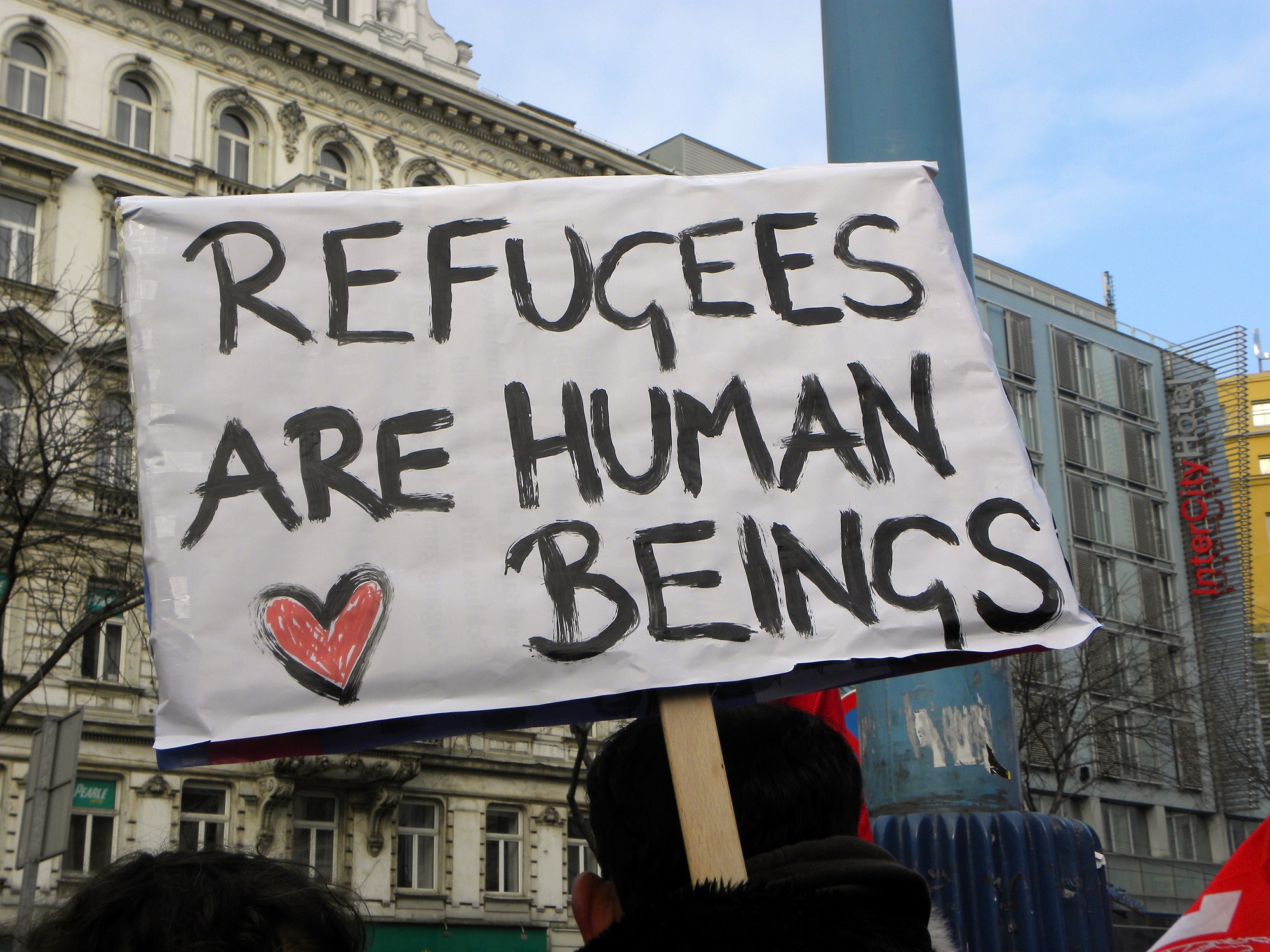
The use of refugees as foreign policy bargaining chips, from Afghanistan to Syria, from Central America to Sub-Saharan Africa, is a dangerous violation of international law and humanitarian principles. Refugees are suffering from long term displacement and loss of their legal status and dignity as borders become more formidable and diplomacy is made more transactional. The international community must rise against instrumentalization of refugees and recommit to policies that prioritize human rights above political expediency in order to sustain a legitimate, moral system of protection. Leverage is not what refugees are. They are human, and the ethical character of our global system depends upon how we respond to them.


About Author/s
